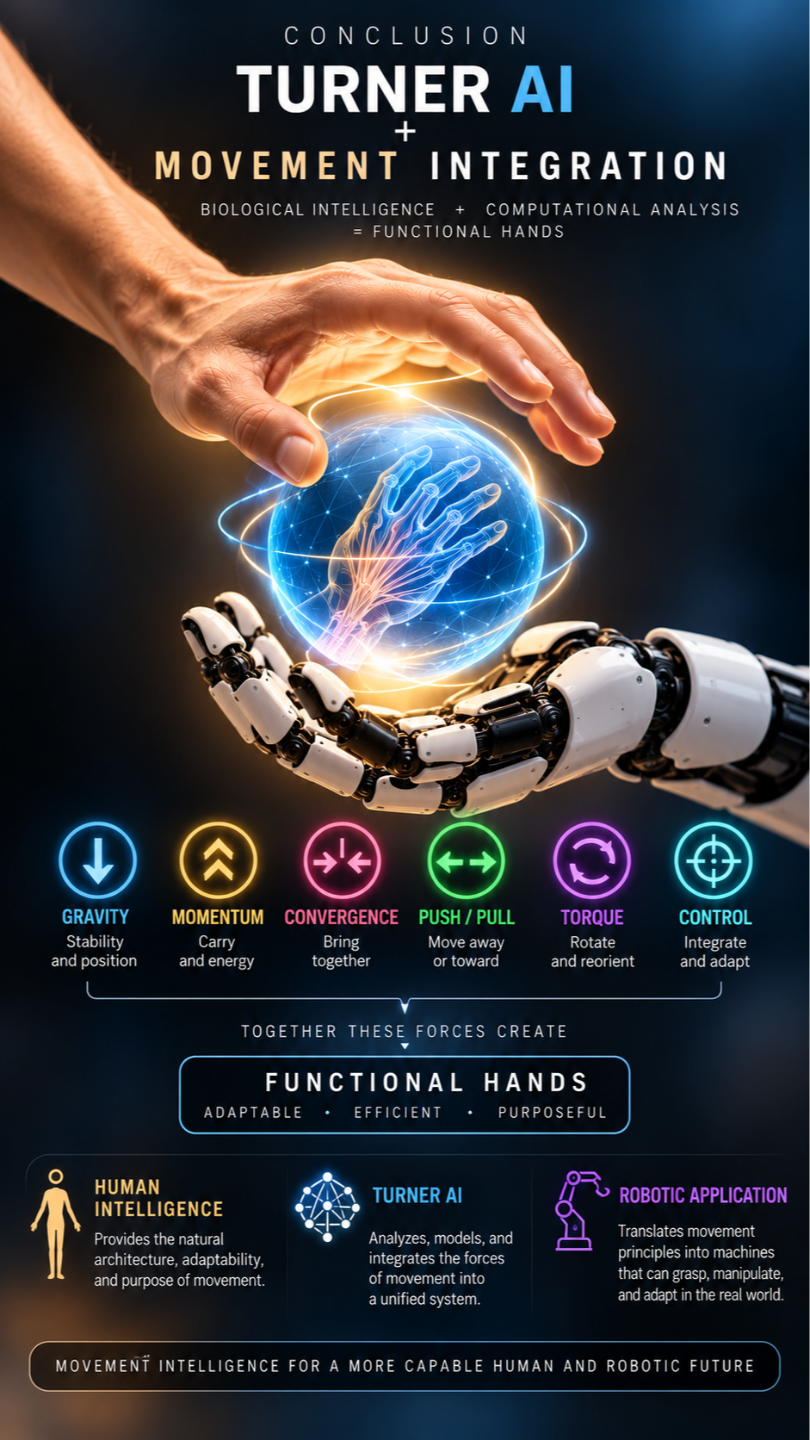
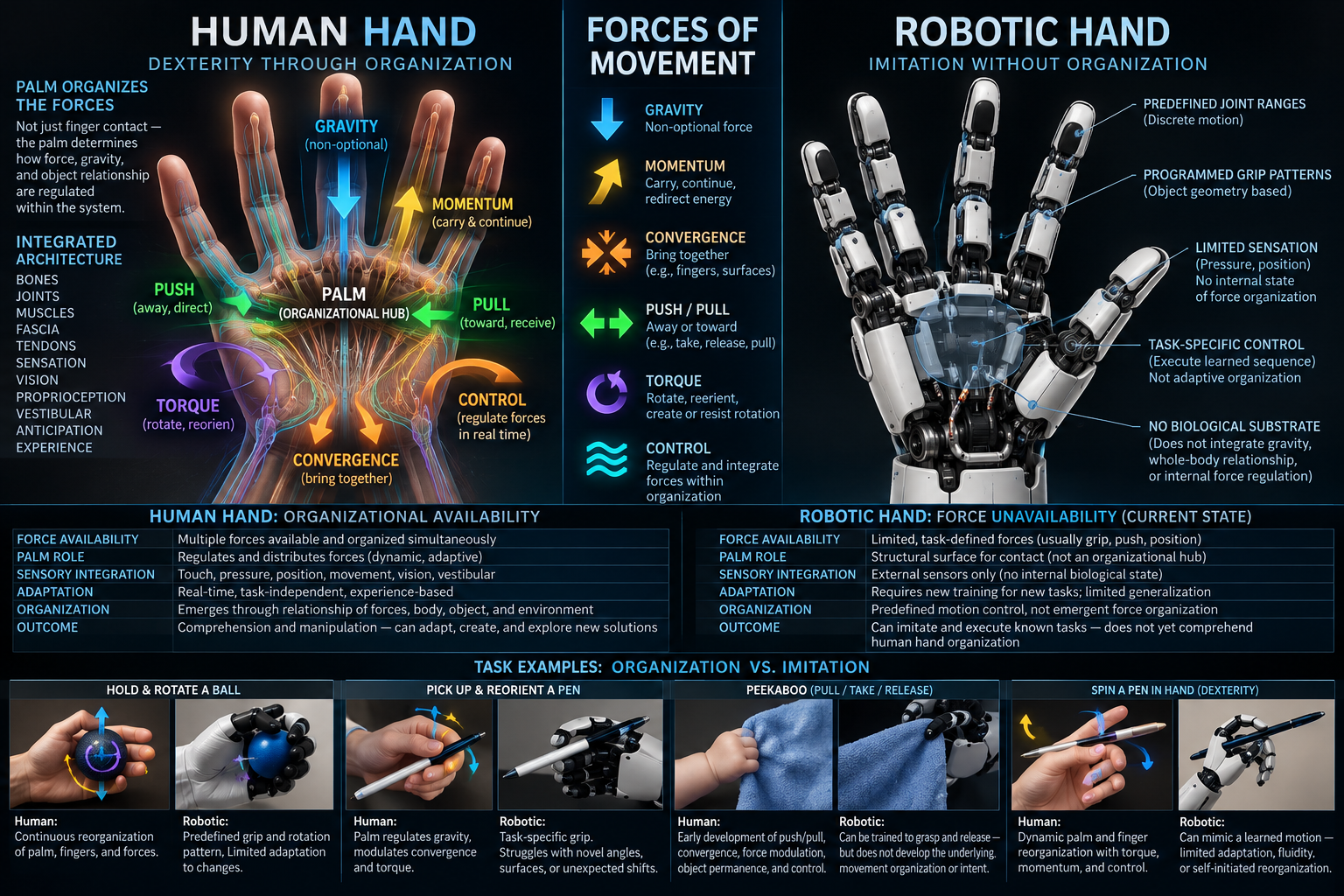
THE HAND IS NOT A GRIPPER.
A human hand does not simply close around objects.
- It receives
- Supports
- Transfers
- Rotates
- Pushes
- Pulls
- Releases
- Reorganizes
A cup, ball, golf club, sheet, tool, or unknown object does not present the same functional problem simply because each can be classified as a manipulation task.
The outcome is not the organization.
Understanding that difference changes how we examine robotics.
Robotic Consultation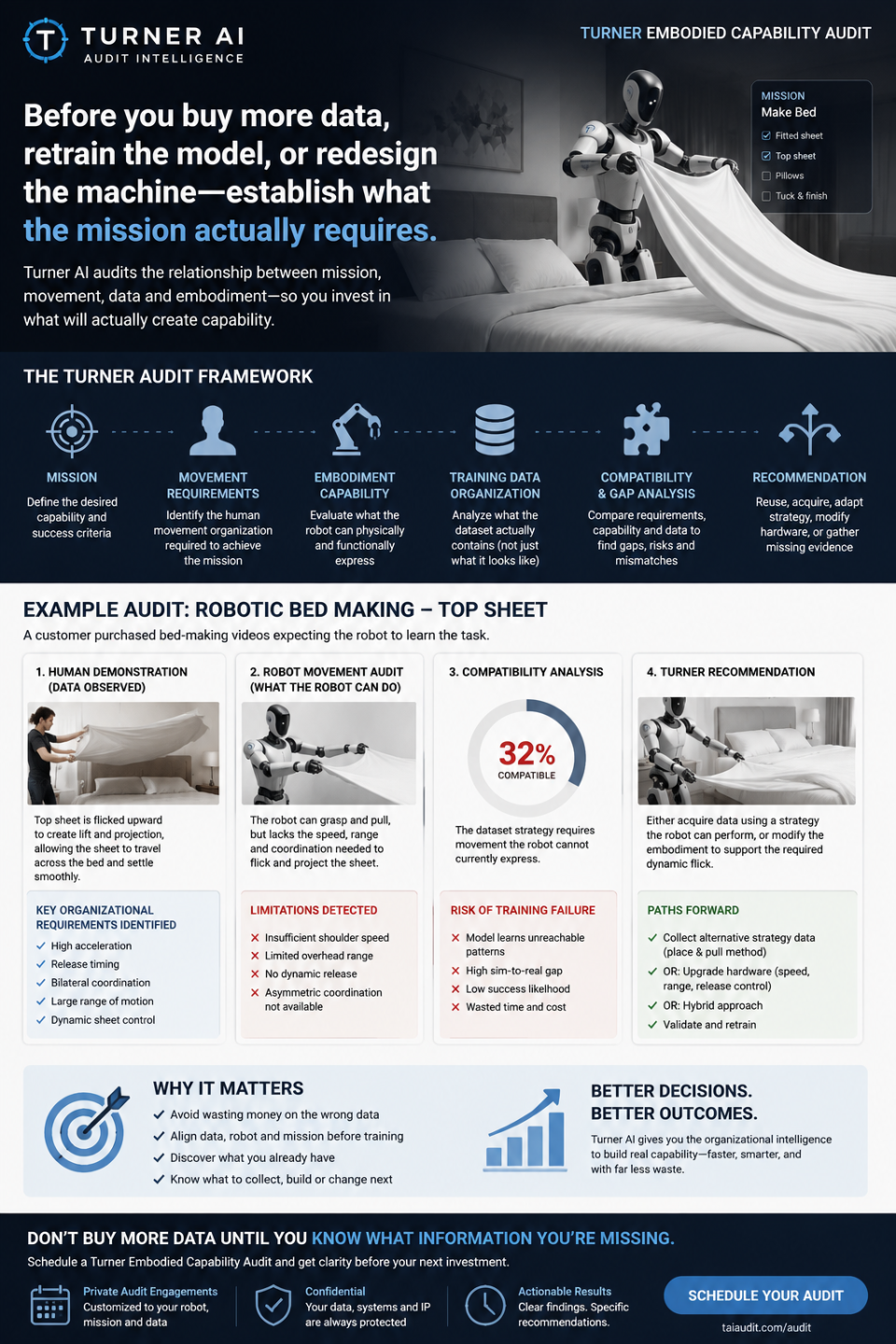
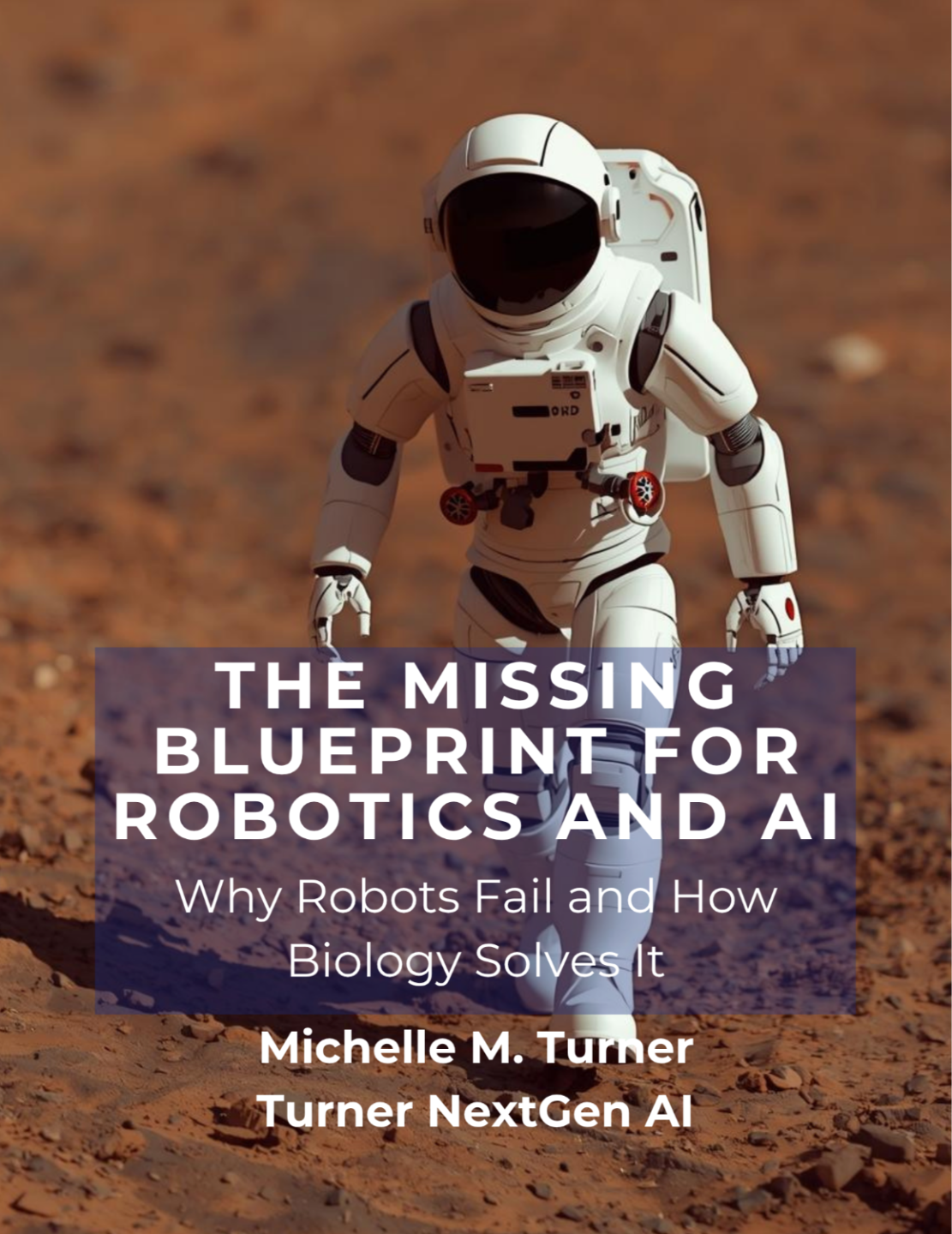
5 THINGS ENGINEERS NEED TO UNDERSTAND FOR HAND FUNCTION AND ROBOTICS
Turner AI is preparing a new engineering brief examining five relationships that can disappear when biological hand function is reduced to robotic task performance:
01 — Grasp Is Not Hand Function
02 — Contact Is Not Touch
03 — The Palm Is Part of the Functional System
04 — The Same Task Does Not Require the Same Organization
05 — Successful Performance Does Not Establish Functional Movement
COMING SOON
Join the priority list to receive the engineering brief and announcements for upcoming Turner AI robotics training.
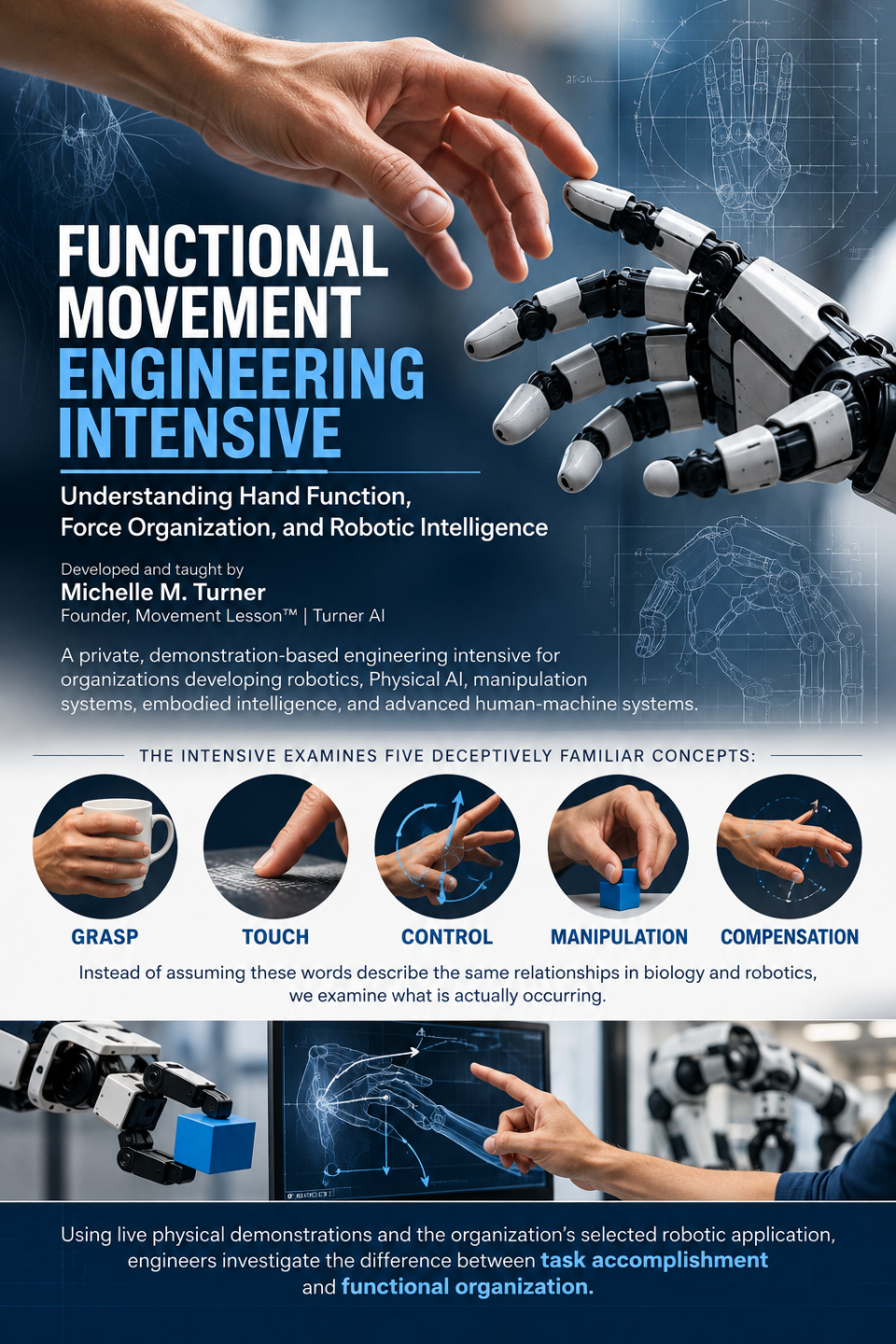
FUNCTIONAL MOVEMENT ENGINEERING INTENSIVE
Understanding Hand Function, Force Organization, and Robotic Intelligence
Developed and taught by Michelle M. Turner
Founder, Movement Lesson™ | Turner AI
A private, demonstration-based engineering intensive for organizations developing robotics, Physical AI, manipulation systems, embodied intelligence, and advanced human-machine systems.
The Intensive examines five deceptively familiar concepts:
- GRASP
- TOUCH
- CONTROL
- MANIPULATION
- COMPENSATION
Instead of assuming these words describe the same relationships in biology and robotics, we examine what is actually occurring.
Using live physical demonstrations and the organization's selected robotic application, engineers investigate the difference between task accomplishment and functional organization.
REQUEST AN ENGINEERING INTENSIVE