Are you ready for a new platform of Artificial Intelligence that you can bring in a true corporate experience?
Imagine your teams, organization, company, and/or institution can now work to take your position to a level with AI.
APPLICATIONS ARE BEING REVIEWED
Current implementations rely on isolated interactions—prompt and response, user and tool—without continuity of context across a team. As a result, organizations attempting to scale AI are forced into fragmented architectures: disconnected tools, duplicated logic, and increasing operational friction.
This is not a limitation of capability. It is a limitation of structure.
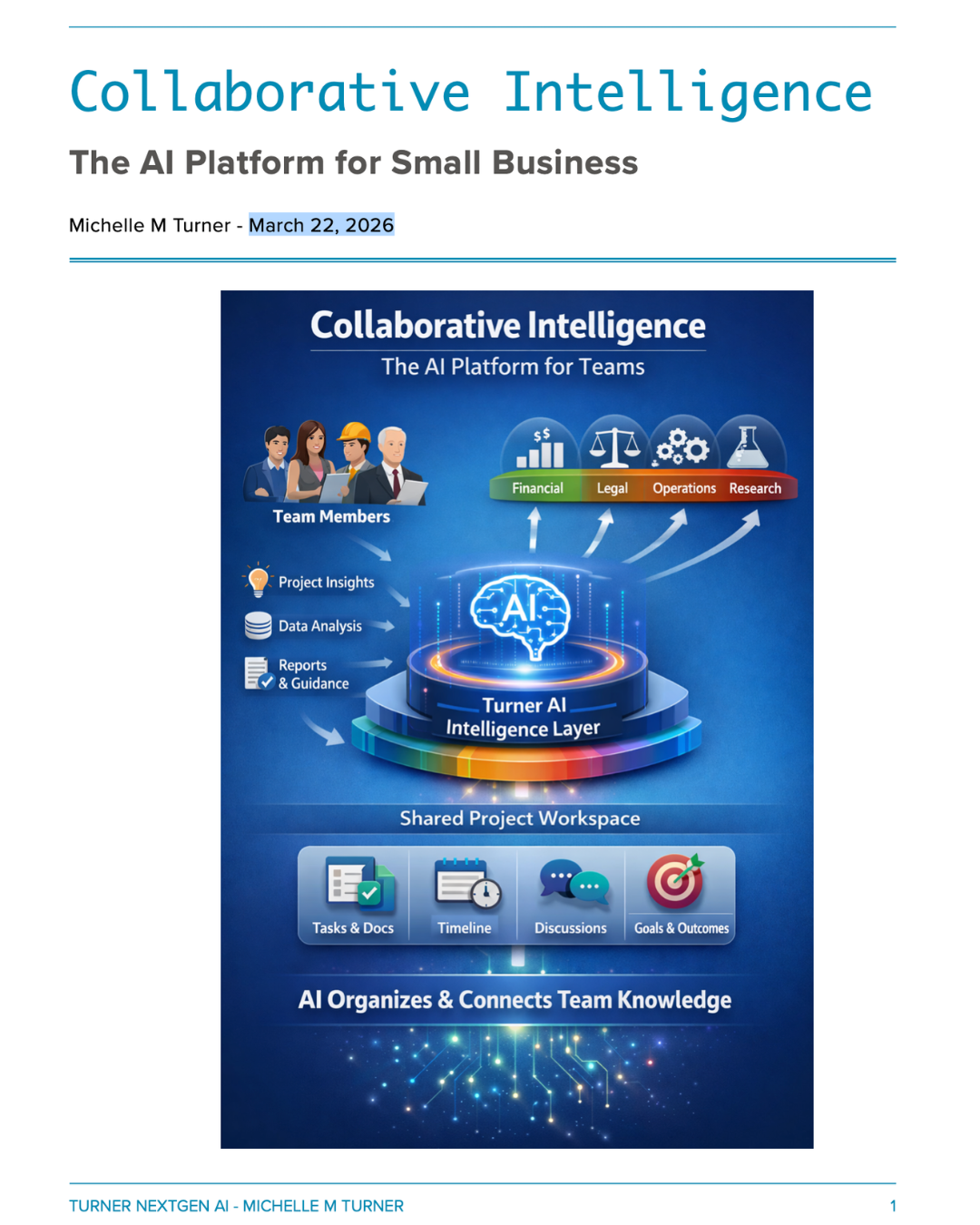
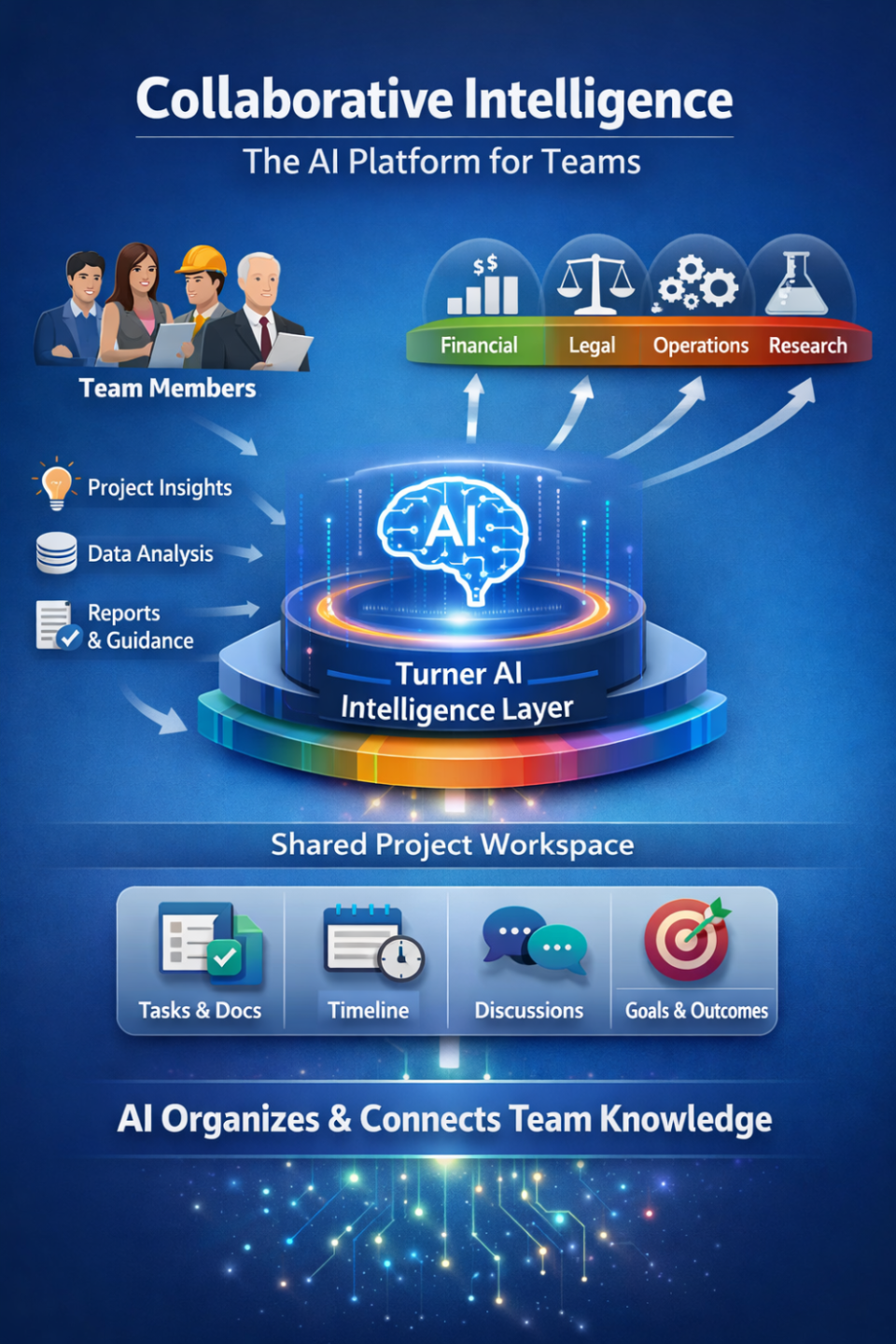
Turner AI introduces a collaborative intelligence architecture in which AI does not sit beside the organization, but operates within it. Multiple users interact within a shared system, where context is retained, decisions are coordinated, and intelligence is continuously organized rather than repeatedly generated.
The result is not improved output. It is a reorganization of how intelligence functions inside a system.
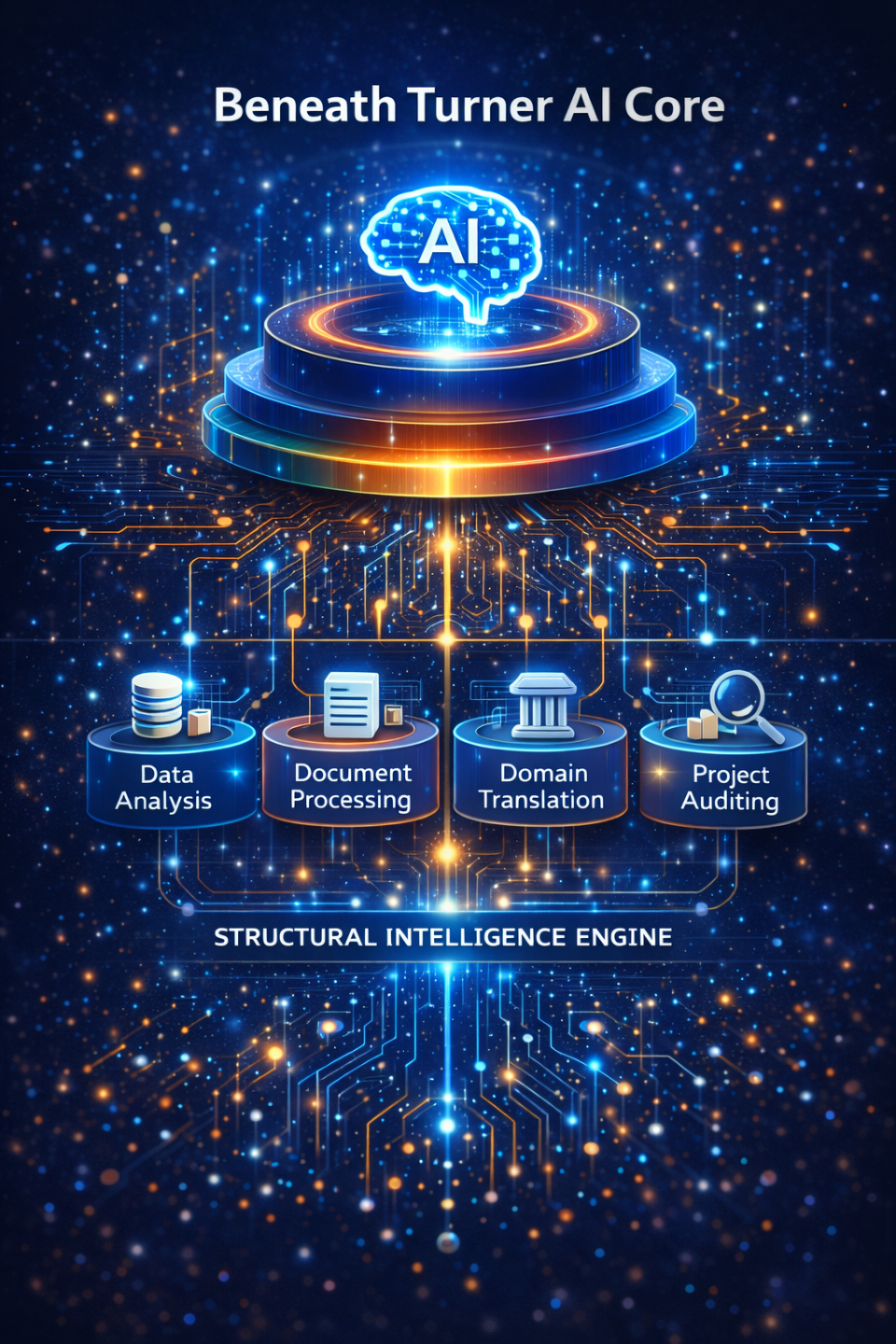
Traditional approaches attempt to assemble intelligence through layers—applications, agents, integrations—each operating with partial visibility. These systems accumulate complexity without achieving coherence.
Turner AI reverses this model.
Instead of adding intelligence to workflows, it establishes a governing structure in which workflows, data, and decision-making are inherently aligned. Intelligence is not produced in isolation, but emerges through the organization of the system itself.
This allows teams to operate within a unified environment where:
- context is shared rather than reconstructed
- coordination is structural rather than procedural
- scale is achieved without fragmentation
The foundation of this system is structural.
Turner Intelligence Architecture is derived from the organization of complex systems—where stability, adaptation, and performance emerge through the interaction of forces rather than isolated actions. Gravity, rotation, buoyancy, and midline are not metaphors; they are governing relationships that define how systems maintain coherence under pressure.
By applying this model computationally, Turner AI enables organizations to identify where continuity breaks, where compensation occurs, and how structure can be restored.
This is not analysis layered onto data.
It is the organization of intelligence itself.
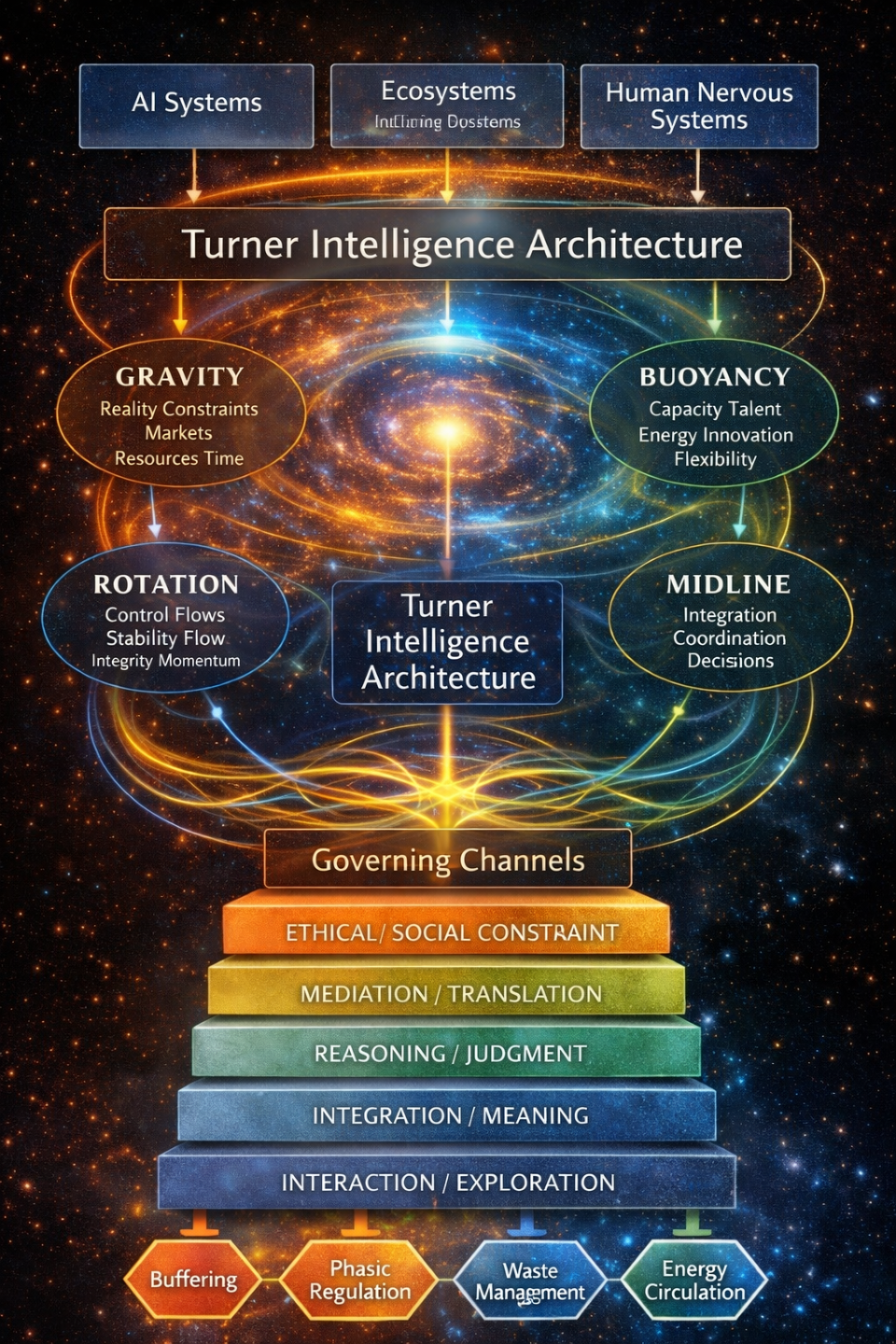
For the first time, artificial intelligence operates as a shared system rather than an individual tool.
Turner AI does not enhance existing workflows.
It defines the environment in which intelligent work occurs.